Author: rsranasultan0000

  • Professional Guidance for Binary Options Crypto Recovery Cases

    Professional Guidance for Binary Options Crypto Recovery Cases

    In today’s rapidly evolving digital financial landscape, many investors encounter significant challenges when dealing with online trading platforms and unregulated investment schemes. One of the most complex situations arises when individuals attempt Binary options crypto recovery after losing funds to fraudulent brokers or compromised trading systems. These cases require a careful, structured approach, combining technical expertise, legal awareness, and investigative diligence to improve the chances of identifying lost assets and understanding how the loss occurred.

    Understanding the Nature of Digital Investment Losses

    Digital financial systems, especially those involving binary options and cryptocurrencies, operate on decentralized or semi-regulated platforms. While this provides flexibility and speed, it also opens doors for misuse by unethical operators. Investors often find themselves dealing with platforms that appear legitimate on the surface but lack proper regulatory oversight.

    In many cases, losses occur due to misleading promises of high returns, manipulated trading dashboards, or outright exit scams where platforms disappear after collecting deposits. The complexity of blockchain transactions further complicates tracing funds, especially when assets are moved across multiple wallets or converted into different cryptocurrencies.

    Understanding the nature of these losses is the first step toward any meaningful recovery effort. Without identifying whether the issue stems from fraud, technical breach, or user error, it becomes difficult to determine the appropriate recovery strategy.

    Common Causes Behind Investment Disputes

    Several recurring factors contribute to financial losses in binary options and crypto-related environments:

    1. Fraudulent Brokerage Platforms

    Some platforms operate without licenses and intentionally mislead investors. They may show fake profits on dashboards while restricting actual withdrawals.

    2. Phishing and Social Engineering Attacks

    Users are often tricked into revealing private keys or login credentials through fake websites or impersonation tactics.

    3. Ponzi and Pyramid Structures

    Certain schemes rely on new investor deposits to pay earlier participants, eventually collapsing when inflows stop.

    4. Malware and Wallet Compromise

    Infections on personal devices can lead to unauthorized access to wallets and exchanges.

    5. Lack of Regulatory Oversight

    In jurisdictions with limited financial regulation, investors may have little legal protection when disputes arise.

    Recognizing these causes helps victims avoid repeating similar mistakes and assists professionals in narrowing down investigative pathways.

    Importance of Professional Assistance in Recovery Cases

    Attempting to recover lost digital assets without expert help can be extremely challenging. Blockchain systems are designed to be immutable, meaning transactions cannot be reversed once confirmed. This makes recovery efforts highly specialized.

    Professional recovery experts bring several advantages:

    • Technical expertise in blockchain analysis
    • Access to forensic tools for transaction tracing
    • Legal knowledge of cross-border financial regulations
    • Experience in handling fraudulent platform documentation
    • Ability to coordinate with exchanges and authorities

    These combined skills significantly improve the likelihood of identifying where funds were transferred and whether they can be intercepted or frozen at any point in the transaction chain.

    Step-by-Step Recovery Process

    While every case is unique, most structured recovery efforts follow a general investigative framework.

    Initial Case Assessment

    The process begins with gathering all available information, including transaction IDs, wallet addresses, communication records, and platform details. This helps establish a timeline of events.

    Blockchain Analysis

    Specialized tools are used to trace the movement of funds across wallets. Even though identities remain hidden behind cryptographic addresses, patterns can sometimes reveal connections to known exchanges or services.

    Evidence Collection

    Screenshots, emails, chat logs, and payment receipts are compiled to build a comprehensive evidence file. This documentation is crucial for any legal or regulatory escalation.

    Exchange Collaboration

    If funds pass through centralized exchanges, recovery specialists may attempt to contact compliance departments to flag suspicious activity.

    Legal and Regulatory Reporting

    In some cases, formal complaints are filed with financial regulators or cybercrime units. This step depends heavily on jurisdiction and the nature of the fraud.

    Challenges in Recovering Digital Assets

    Despite professional efforts, recovery is not always guaranteed. Several obstacles can hinder progress:

    Transaction Irreversibility

    Once a blockchain transaction is confirmed, it cannot be undone, limiting direct refund options.

    Cross-Border Jurisdiction Issues

    Fraudulent operators often operate across multiple countries, complicating legal enforcement.

    Use of Privacy Tools

    Mixers, tumblers, and privacy-focused cryptocurrencies make tracing funds significantly more difficult.

    Delayed Reporting

    The longer a victim waits to report the incident, the harder it becomes to track and recover assets.

    These challenges highlight why early action is critical in any recovery scenario.

    How Experts Approach Complex Cases

    Professional recovery specialists typically combine multiple disciplines to handle cases effectively.

    Forensic Investigation Techniques

    Advanced blockchain analytics tools are used to map transaction flows and identify potential exit points.

    Legal Coordination

    Lawyers and compliance experts help determine which jurisdictions can be involved and what legal actions are possible.

    Negotiation Strategies

    In some cases, funds may still be held by intermediaries or exchanges that can be persuaded to freeze or return assets.

    Intelligence Gathering

    Experts may analyze patterns across multiple scam cases to identify recurring operators or networks.

    This multidisciplinary approach allows for a more structured and strategic response to complex financial fraud cases.

    Selecting a Reliable Recovery Service

    Choosing the right professionals is critical, as the recovery industry itself can sometimes attract unethical actors.

    Warning Signs of Untrustworthy Services

    • Requests for large upfront fees without clear explanation
    • Guaranteed recovery promises (which are unrealistic)
    • Lack of verifiable track record
    • No formal contract or documentation process

    Qualities of a Legitimate Provider

    • Transparent communication about success probabilities
    • Detailed case evaluation before commitments
    • Clear explanation of tools and methods used
    • Positive verifiable client history

    Due diligence is essential before engaging any recovery service to avoid further losses.

    Preventive Measures for Future Protection

    While recovery efforts focus on lost assets, prevention remains the most effective strategy.

    Conduct Thorough Platform Research

    Always verify licensing, reviews, and regulatory status before investing.

    Use Secure Wallet Practices

    Hardware wallets and strong authentication methods reduce risk exposure.

    Avoid Unverified Investment Offers

    High-return promises with little explanation are often red flags.

    Maintain Security Hygiene

    Regular software updates, antivirus protection, and secure browsing habits help prevent malware attacks.

    By adopting these measures, investors can significantly reduce the likelihood of future financial losses.

    Final Thoughts

    The world of digital finance offers both opportunity and risk, and navigating losses requires patience, expertise, and a structured approach. Understanding how fraud occurs, what recovery processes involve, and how professionals operate can make a significant difference in outcomes. While not every case results in full restitution, informed action improves the chances of partial or complete recovery. In situations where individuals feel overwhelmed by complex trading fraud, seeking expert guidance remains one of the most important steps they can take when dealing with Binary options crypto recovery.


  • The Numbers Game: Understanding the (Im)Practical Reality of Brute-Force Wallet Recovery

    The Numbers Game: Understanding the (Im)Practical Reality of Brute-Force Wallet Recovery

    The modern digital landscape has gifted us with unprecedented financial autonomy through cryptocurrency wallets, but this freedom comes with a terrifying double-edged sword: the absolute finality of lost access. Unlike a traditional bank where a phone call can reset a password, a lost private key or forgotten seed phrase can feel like throwing a handful of diamonds into a black hole. In moments of desperation, many individuals begin searching for solutions, often encountering the concept of brute force wallet recovery. This method, which involves trying every possible combination of characters until the correct one unlocks the funds, sounds like a plausible, if tedious, technological hack. However, when you actually begin to calculate the numbers, the dream of cracking a modern cryptographic wallet through sheer computational force rapidly dissolves into a practical nightmare, revealing a vast chasm between mathematical possibility and real-world achievability.

    The Immense Scale of Cryptographic Keys

    To understand why brute-force attacks are almost always doomed to fail, one must first grasp the sheer size of the numbers involved in modern encryption. A standard Bitcoin or Ethereum wallet uses a 256-bit private key. This means there are 2^256 possible keys. Written out, that is approximately 115,792,089,237,316,195,423,570,985,008,687,907,853,269,984,665,640,564,039,457,584,007,913,129,639,936 possibilities. This number is so vast that it dwarfs the number of atoms in the observable universe, which is estimated to be around 10^80. Trying to find a single specific key within this space is statistically comparable to selecting a single grain of sand from the entire Earth, then flying to another galaxy, picking a single grain of sand there, and hoping they are the same one. The human mind is not evolutionarily equipped to comprehend quantities of this magnitude, which is why many fall prey to fraudulent services promising to “crack” their wallets.

    The Fallacy of “Just Trying Passwords”

    Many individuals confuse brute-force wallet attacks with cracking a simple six-character email password. They imagine a program cycling through “password1,” “password2,” and “qwerty123” until it finds a match. However, cryptocurrency wallets do not rely on simple user-generated passwords for their primary security. Instead, they rely on that massive 256-bit key, or a 12-to-24-word seed phrase drawn from a dictionary of 2048 words. The number of possible 24-word seed phrases is 2048^24, which is roughly 2^264—an even larger number than the private key space. Even if an attacker knew with certainty that the wallet used a weak, eight-character password, the computational problem changes. But in a true brute-force scenario where no information about the key or phrase exists, the numbers become insurmountable. The attacker is not guessing a needle in a haystack; they are guessing a specific atom within a haystack made of billions of identical galaxies.

    Computational Reality: Time, Energy, and Heat

    Leaving abstract mathematics aside, let us consider the physical and temporal limits of computing hardware. The most powerful supercomputers on Earth, such as Frontier at Oak Ridge National Laboratory, can perform just over one quintillion (10^18) operations per second. If we hypothetically dedicated this entire machine to nothing but brute-force wallet recovery, checking one key per operation, how long would it take to search even a tiny fraction of the 2^256 space? The answer is approximately 3.67 × 10^57 years. To put that in perspective, the universe is currently about 1.38 × 10^10 years old. This means that the world’s most powerful supercomputer would need to run for longer than the current age of the universe, multiplied by a factor of 10^47, to have a reasonable chance of finding a single key.

    The Energy Cost of Computation

    Furthermore, there is a fundamental physical limit to computation, known as Landauer’s principle, which states that erasing a bit of information requires a minimum amount of energy. Even if we built a perfect, zero-friction computer operating at this theoretical minimum, the energy required to count from 0 to 2^256 would be astronomically high—far exceeding the total energy output of every star in the observable universe for the entire lifespan of the cosmos. This is not merely a matter of waiting a long time; it is a violation of known physical laws. Any company or individual claiming they can perform a comprehensive brute force wallet recovery on a lost high-entropy key is either delusional or running a scam. The numbers do not lie, and the physics simply does not allow it.

    Common Attack Vectors Versus True Brute Force

    It is crucial to distinguish between a pure brute-force attack and other, more realistic recovery methods. Many services that advertise “wallet cracking” are actually performing highly targeted dictionary attacks, social engineering, or exploiting known vulnerabilities in outdated software. For example, if a user can remember that their password is a variation of their pet’s name and birth year, an attacker with specialized hardware might try a few billion plausible combinations. This is not brute force; it is a heuristic attack. Similarly, if a wallet file is encrypted with a weak, low-entropy password (like “12345678”), a standard computer might crack it in days. However, this is a failure of the user’s password choice, not a failure of the wallet’s underlying cryptography. When people speak of brute-force wallet recovery in the context of a randomly generated 12-word seed or a strong 256-bit key, the conversation moves from “difficult” to “physically impossible.”

    Why Scammers Thrive on This Misunderstanding

    The disconnect between theoretical possibility and practical reality creates a fertile ground for fraud. Desperate individuals who have lost access to significant sums of cryptocurrency are particularly vulnerable. Scammers will offer “brute force” services for a hefty upfront fee, often providing fake progress bars or “partial match” reports to string the victim along. They rely on the victim’s lack of mathematical understanding and their emotional need for hope. Some sophisticated scams even deploy malware disguised as wallet recovery tools, which steal any remaining funds or personal information from the victim’s computer. Understanding the numbers—the sheer impossibility of searching a 2^256 key space—is the single best defense against these predators. If a service claims it can brute-force a lost high-entropy key where the user remembers nothing, the only rational response is to walk away.

    When Is Brute Force Actually Practical?

    Despite the overwhelming odds against full-key brute forcing, there are narrow, realistic scenarios where computational guessing is viable. These scenarios always involve partial knowledge. For instance, if a user remembers 90% of their seed phrase but has forgotten one word, there are only 2048 possibilities—a trivial task for a home computer. Similarly, if a user remembers that their password is between 6 and 10 characters long and contains only lowercase letters, the search space is manageable (approximately 26^1 + 26^2 … + 26^10 ≈ 1.4 × 10^14 possibilities), which could be exhausted with specialized hardware in a matter of months or years. Professional recovery firms focus almost exclusively on these “mask attacks” or “rule-based attacks,” where the number of unknowns is small enough to be computationally feasible. They never claim to brute force a truly random 256-bit key from scratch, because doing so would be a waste of electricity and time.

    The Role of Hardware Acceleration

    For those narrow scenarios where partial information exists, hardware like FPGAs (Field-Programmable Gate Arrays) or ASICs (Application-Specific Integrated Circuits) can dramatically accelerate the process. While a standard CPU might check a few million passwords per second, a well-optimized FPGA cluster can check billions per second. This is the technology used by professional recovery services and law enforcement when attempting to access encrypted devices with known weaknesses. However, even the most powerful ASIC is powerless against a full 256-bit key. The laws of thermodynamics and the finite speed of light ensure that no future technology, whether quantum or otherwise, will ever make exhaustive search of such a vast space practical within the lifespan of humanity. Quantum computers, using Grover’s algorithm, could theoretically reduce the search space to the square root—roughly 2^128 operations. While vastly smaller, 2^128 is still an astronomically large number (340 undecillion), requiring millions of years of work on a fault-tolerant quantum computer that does not yet exist.

    Conclusion:

    The allure of brute-force wallet recovery is the allure of a magic bullet—a way to circumvent the immutable laws of mathematics and reclaim lost digital gold. But the numbers tell a very different story. They speak of key spaces larger than the number of atoms in the universe, of computation times exceeding the age of everything, and of energy costs that would dwarf the output of entire galaxies. For the vast majority of lost wallets where no partial information exists, the only honest answer is that the funds are gone forever, as irrevocably as if they had been burned. This harsh reality is not a limitation of technology, but rather a testament to the strength of the cryptography that secures billions of dollars in assets. Anyone considering a brute force wallet recovery service must first ask for a mathematical justification of how they will overcome 2^256 possibilities. If the answer does not begin with “we already know 90% of the key,” the service is likely fraudulent. For those facing a true total loss, the most practical advice is to mourn the funds, learn from the experience, and explore legitimate avenues like the team at radleyassist.com for realistic recovery options—though even they will tell you that no service, anywhere, can break the fundamental laws of mathematics. The numbers, in the end, always win.

  • Online Fraud Prevention: How to Stay One Step Ahead of Scammers

    In today’s digital age, online fraud is a growing concern for individuals and businesses alike. As technology evolves, so do the tactics employed by scammers, making it increasingly difficult to identify and protect oneself from fraudulent schemes. The internet offers numerous opportunities for scammers to exploit unsuspecting victims, from phishing emails and identity theft to fake websites and investment scams. Therefore, it is crucial to take proactive steps to protect yourself from online fraud. This article will explore the best practices for online fraud prevention, providing practical tips on how to stay one step ahead of scammers.

    Understanding Online Fraud

    Online fraud refers to any deceptive activity that occurs over the internet with the intent to defraud individuals or organizations. Scammers often use sophisticated techniques to manipulate people into providing sensitive information, such as passwords, credit card numbers, or social security numbers. Some of the most common types of online fraud include:

    • Phishing: Fraudulent emails or websites designed to impersonate legitimate institutions, such as banks or e-commerce platforms, in order to steal personal information.
    • Identity Theft: Scammers collect personal information and use it to commit fraud, such as opening credit accounts or making unauthorized transactions in the victim’s name.
    • Investment Scams: Fraudsters offer fake investment opportunities, such as cryptocurrency schemes or high-return stocks, to trick victims into parting with their money.
    • Online Shopping Scams: Fake online stores or auction sites that lure consumers into making purchases for items that never arrive.

    With these risks in mind, it is essential to adopt a comprehensive approach to online fraud prevention that includes awareness, technological tools, and proactive measures.

    Key Strategies for Online Fraud Prevention

    1. Use Strong, Unique Passwords

    One of the simplest and most effective ways to prevent online fraud is by using strong and unique passwords for all of your online accounts. Weak passwords, such as “password123” or “qwerty,” are easily guessed by hackers, allowing them to gain access to your accounts. A strong password should be a combination of uppercase and lowercase letters, numbers, and special characters. Avoid using easily identifiable information, such as birthdays or names, in your passwords.

    Furthermore, it’s essential to use different passwords for each of your accounts. If a hacker gains access to one of your accounts, they will not be able to use the same password to access your other accounts. Consider using a password manager to securely store and generate strong passwords for all of your online accounts.

    2. Enable Two-Factor Authentication (2FA)

    Two-factor authentication (2FA) is an additional layer of security that can help prevent unauthorized access to your accounts. With 2FA, even if a scammer has your password, they will not be able to log in without a second form of verification. This can include a text message with a code, an email verification, or a biometric scan, such as fingerprint or face recognition.

    Many online services, including email providers, banking platforms, and social media sites, offer 2FA as an optional feature. Enabling 2FA is a simple yet effective way to enhance the security of your accounts and significantly reduce the risk of online fraud.

    3. Be Cautious of Phishing Scams

    Phishing is one of the most common forms of online fraud. Scammers often send fraudulent emails or text messages that appear to come from legitimate sources, such as banks, government agencies, or online retailers. These messages typically ask you to click on a link, download an attachment, or enter your personal information on a fake website.

    To avoid falling victim to phishing scams, always verify the sender’s email address or phone number before responding to any messages. Be cautious of any unsolicited requests for personal information, especially if they involve urgent or alarming messages. A legitimate organization will never ask you to provide sensitive details through email or text. When in doubt, contact the organization directly using their official contact information.

    4. Monitor Your Financial Accounts Regularly

    Regularly monitoring your financial accounts is crucial for identifying signs of online fraud. Check your bank statements, credit card statements, and credit reports for any unauthorized transactions or changes to your accounts. Many banks and financial institutions offer fraud detection services that can alert you to suspicious activity in real-time.

    In addition, consider using services that allow you to freeze your credit or place fraud alerts on your credit file. This makes it more difficult for scammers to open accounts in your name or take out loans using your identity.

    5. Invest in Anti-Malware and Anti-Virus Software

    Malware and viruses are common tools used by scammers to gain access to personal information. These malicious programs can infect your computer or mobile device, recording your keystrokes, capturing screenshots, or monitoring your browsing activity. To prevent malware infections, always use reputable anti-virus and anti-malware software. Ensure that your software is updated regularly to protect against new threats.

    Additionally, avoid downloading software or opening email attachments from untrusted sources. If you need to download files or software, make sure you are doing so from official websites or trusted platforms.

    6. Be Mindful of Public Wi-Fi Networks

    Public Wi-Fi networks, such as those found in cafes, airports, or hotels, can be a prime target for hackers looking to intercept your personal information. When using public Wi-Fi, avoid accessing sensitive accounts or entering personal information, as the network may not be secure. If you must use public Wi-Fi, consider using a Virtual Private Network (VPN) to encrypt your internet connection and protect your data.

    7. Report Suspicious Activity Immediately

    If you suspect that you have fallen victim to online fraud, it is crucial to act quickly. Report the incident to the appropriate authorities, such as your bank, the local police, or a national fraud prevention organization. The faster you report the scam, the better the chances of recovering your funds or preventing further damage.

    Conclusion

    Online fraud is an ever-present threat, but with the right precautions and awareness, you can significantly reduce the risk of falling victim to scams. By following the best practices outlined in this article, such as using strong passwords, enabling two-factor authentication, and staying vigilant against phishing attacks, you can protect yourself and your personal information from fraudulent activity. With the right tools and proactive strategies, online fraud prevention is within reach for everyone. Staying one step ahead of scammers requires a combination of knowledge, technology, and common sense—ensure that you are doing everything you can to safeguard your digital life. Visit RadleyFinance.com for More Information and assistance.

  • Finance for Freelancers: Managing Income in the Gig Economy

    Finance for Freelancers: Managing Income in the Gig Economy

    Freelancing offers freedom, flexibility, and the chance to be your own boss—but it also brings financial challenges that traditional employees rarely face. Without a steady paycheck, employer benefits, or automatic tax withholding, managing money in the gig economy requires strategy, discipline, and adaptability.

    Whether you’re a seasoned freelancer or just diving into self-employment, this guide will help you master your finances and thrive in the world of gig work.

    1. Know Your Numbers: Track Every Dollar

    Inconsistent income makes budgeting more complex, but it also makes tracking your money even more essential. Start with a system that shows:

    • How much you’re earning (per project, per client, per month)
    • Your recurring expenses (both personal and business)
    • Seasonal trends (busy vs. slow months)

    Use budgeting apps like YNAB, Mint, or QuickBooks Self-Employed to stay organized and gain insights into your cash flow.

    2. Build a Buffer: Your Income Safety Net

    One of the most powerful things a freelancer can do is build an emergency fund or “income buffer.” Aim to set aside 3–6 months’ worth of essential expenses so you’re covered when:

    • A client is late on payment
    • You hit a slow work season
    • You want to take time off without stress

    Think of it as your freedom fund—giving you security without sacrificing flexibility.

    3. Separate Business and Personal Finances

    Mixing business and personal money leads to confusion and tax headaches. Do this instead:

    • Open a separate bank account for your freelance income and expenses
    • Use a dedicated credit or debit card for business purchases
    • Keep records of invoices, receipts, and payments

    This not only keeps things clean—it makes you look more professional and simplifies tax time.

    4. Plan for Taxes Year-Round

    Unlike traditional employees, freelancers must handle their own taxes, including:

    • Self-employment tax (Social Security and Medicare)
    • Quarterly estimated payments (due four times a year in many countries)
    • Deductions for business-related expenses (like equipment, home office, and software)

    A good rule of thumb: set aside 25–30% of each payment into a tax savings account. Consider using accounting software or hiring a tax pro who specializes in freelance income.

    5. Price Your Work Strategically

    Don’t just pick a rate and hope it covers your bills. Factor in:

    • Your ideal annual income
    • Your business expenses and tax obligations
    • The number of billable hours you can realistically work
    • Market rates and your level of expertise

    Remember, you’re not just paid for your time you’re paid for your value. Don’t undersell yourself.

    6. Think Long-Term: Retirement and Insurance

    As a freelancer, no one’s handling your benefits for you. But that doesn’t mean you should ignore them:

    • Set up a retirement plan like a SEP IRA, Solo 401(k), or Roth IRA
    • Shop for health, disability, and liability insurance
    • Consider setting aside funds for professional development or upskilling

    These aren’t luxuries—they’re essential pieces of your financial future.

    7. Diversify Your Income Streams

    Relying on one client or income source is risky. Many successful freelancers:

    • Offer different services or packages
    • Sell digital products or online courses
    • Build passive income streams (like affiliate marketing or licensing content)

    Multiple streams = more stability. It’s not about working more it’s about working smarter.

    Final Thoughts: Freelance Freedom with Financial Confidence

    Being a freelancer doesn’t mean you have to live paycheck to paycheck or feel financially anxious. With the right habits, systems, and planning, you can create a resilient, rewarding freelance lifestyle.

    Money in the gig economy may flow differently but when you learn to manage it well, it can work beautifully in your favor.

  • 5 Money Habits That Separate the Wealthy from the Rest

    5 Money Habits That Separate the Wealthy from the Rest

    When it comes to building wealth, it’s less about luck and more about habits. While many people dream of financial success, the wealthy often live by principles and routines that consistently grow their money over time.

    So what exactly do they do differently?

    Here are five money habits that tend to separate the financially successful from the rest and how you can start applying them to your own life today.

    1. They Pay Themselves First

    Before spending a dime, wealthy individuals prioritize saving and investing. This is known as paying yourself first automatically directing a portion of your income into:

    • Retirement accounts (like a 401(k) or IRA)
    • Emergency savings
    • Investment portfolios

    They treat saving as a non-negotiable, just like paying rent or utilities, and automate it so it happens consistently. Even if you start small, this habit builds serious momentum over time.

    2. They Make Their Money Work for Them

    Wealthy people understand that time is money but money is also time. Rather than letting cash sit idle, they put it to work through:

    • Investments in stocks, real estate, or businesses
    • Compound interest, which grows wealth exponentially
    • Passive income streams that continue to earn without constant effort

    They don’t just work for money they create systems where money works for them, even while they sleep.

    3. They Live Below Their Means—Not Just Within Them

    One of the most surprising traits of the wealthy? Many live well below their means. Instead of spending to show off their wealth, they:

    • Focus on value and long-term ROI over status symbols
    • Avoid lifestyle inflation when their income increases
    • Prioritize financial freedom over flashy purchases

    This habit allows them to save and invest more building wealth faster and more sustainably than those who spend everything they earn.

    4. They Keep Learning About Money

    Financially successful people don’t assume they know it all. They make a habit of learning and evolving their money mindset, by:

    • Reading finance books, blogs, and market reports
    • Listening to podcasts or taking courses
    • Consulting with financial advisors or mentors

    Their curiosity keeps them informed, adaptive, and strategic in managing their finances.

    5. They Set Clear Financial Goals—and Review Them Often

    Wealthy people treat their money like a business: they set measurable goals, create timelines, and track progress. They:

    • Define what success looks like (early retirement, real estate empire, philanthropic impact)
    • Break large goals into manageable steps
    • Reassess regularly to stay on track or pivot when needed

    This clarity gives them a sense of control and keeps their money aligned with their life purpose.

    Final Thoughts: Wealth Is Built, Not Found

    The difference between the wealthy and everyone else often comes down to consistent, intentional habits not income level alone.

    Start with one habit. Maybe it’s automating your savings. Maybe it’s tracking your expenses or setting a goal. Small changes, when done consistently, can lead to transformational results over time.

    Remember: Wealth is not just about how much you earn it’s about how wisely and purposefully you use it.

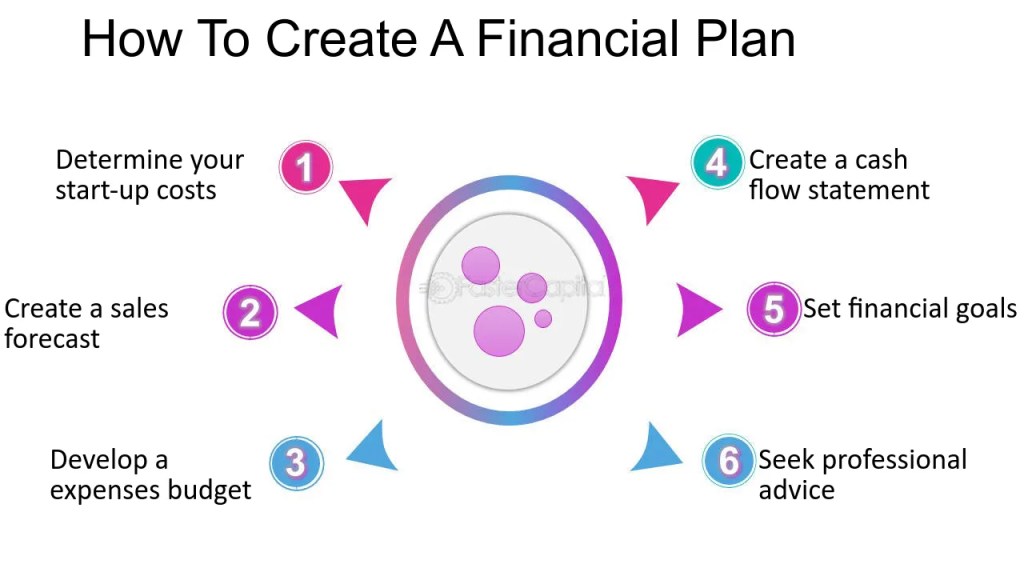
  • How to Build a Financial Plan That Works for Your Life

    How to Build a Financial Plan That Works for Your Life

    Managing money can feel overwhelming but it doesn’t have to be. A solid financial plan isn’t about depriving yourself or making perfect predictions. It’s about creating a roadmap that aligns with your goals, your values, and your lifestyle.

    Whether you’re starting fresh or looking to refine your strategy, here’s how to build a financial plan that works for your life on your terms.

    1. Start with Your Wh

    Before crunching numbers, get clear on your financial purpose. Ask yourself:

    • What do I want to achieve in the next 1, 5, and 10 years?
    • What kind of lifestyle brings me peace, joy, or security?
    • What does financial freedom look like for me?

    Your answers form the foundation of your financial plan. Maybe it’s buying a home, retiring early, or simply being debt-free. Whatever your goals, let them guide your decisions.

    2. Know Your Numbers

    To move forward, you need a clear picture of where you stand right now. Track:

    • Income: Your total monthly take-home pay
    • Fixed expenses: Rent/mortgage, utilities, insurance, etc.
    • Variable expenses: Groceries, dining out, entertainment, etc.
    • Debt: Credit cards, student loans, auto loans
    • Savings and assets: Bank balances, investments, property

    This snapshot is your financial baseline. It shows what’s working and what needs attention.

    3. Set SMART Financial Goals

    Goals should be Specific, Measurable, Achievable, Relevant, and Time-bound. For example:

    • Save $5,000 for an emergency fund in 12 months
    • Pay off $3,000 in credit card debt within 8 months
    • Invest 15% of your income for retirement starting this year

    SMART goals give you direction and a way to measure your progress.

    4. Create a Realistic Budget

    A budget isn’t a punishment—it’s a spending plan that helps you align your money with your values. Consider using the 50/30/20 rule as a flexible starting point:

    • 50% for needs (rent, bills, groceries)
    • 30% for wants (dining, travel, hobbies)
    • 20% for savings and debt repayment

    Adjust it to fit your situation, and revisit it regularly.

    5. Build an Emergency Fund

    Life happens—and when it does, an emergency fund keeps you from going into debt. Aim to save:

    • $1,000 as a starter fund, then
    • 3–6 months of essential expenses over time

    Keep this money in a separate, easily accessible savings account.

    6. Tackle Debt Strategically

    Not all debt is created equal. Make a plan to pay off high-interest debt first, like credit cards. Two popular strategies:

    • Debt snowball: Pay off smallest balances first for motivation
    • Debt avalanche: Pay off highest-interest debt first to save more

    Choose the one that fits your mindset—and stick with it.

    7. Invest in Your Future

    The earlier you start investing, the more time your money has to grow. Consider:

    • Contributing to employer-sponsored retirement plans (like a 401(k))
    • Opening a Roth IRA or traditional IRA
    • Using low-cost index funds or robo-advisors for simplicity

    Even small, regular contributions can lead to significant long-term growth.

    8. Protect What You’re Building

    Don’t forget to plan for the unexpected:

    • Get health, life, and disability insurance
    • Create a will and name beneficiaries
    • Consider talking to a financial advisor for personalized advice

    Financial protection is just as important as growth.

    9. Review and Adjust Ofte

    Your life changes—so should your financial plan. Review it at least once a year, or whenever you:

    • Change jobs
    • Get married or have kids
    • Buy a home or relocate
    • Experience a major financial shift

    A financial plan is a living document, not a one-time project.

    Final Thoughts: Make It Yours

    There’s no one-size-fits-all plan. The best financial strategy is the one you’ll actually stick to—the one that respects your life, your goals, and your dreams.

    Start where you are. Use what you have. And remember: every step forward counts.

    Financial peace isn’t about perfection—it’s about progress.

Design a site like this with WordPress.com
Get started